

While we are more a month away from Welsh Wine Week (29 May-7 June), I thought – as the sun has decided to make a brief appearance – to talk again about why we should be excited about this burgeoning Welsh drink industry. Plus, it’ll give you plenty of time to get your hands on any of my suggestions before Welsh wine week kicks off next month.
As I’ve mentioned before, while the wine scene might still be emerging, wine history in Wales stretches back millennia. The romans were likely growing vines and making wine around their major settlements such as Caerleon and Caerwent. Demand would have outstripped production but that would have meant wine was imported from around the empire and drunk widely in Wales, certainly by the upper classes, although beer and mead were still the biggest tipples.
Skip forward several hundred years, and we see grapevine growing happening again, within the grounds of Castell Coch thanks to the Marquis of Bute and his gardener Andrew Pettigrew. Production again would have been small (3,000 bottles a year) but it established the premise that Wales is a place to grow grapes and make wine – and notably it was the first commercial vineyard in the UK. Sadly, the venture ceased with the onset of the first world war.
You have to jump forward again some 70 years to find vineyards planted again. Since 1980s, they’ve seen a steady increase and Wales now has somewhere in the region of 60 vineyards, many of which are producing wines.
For a wine writer like me, it’s fascinating. It’s why I was delighted to be invited to visit several vineyards last year and learn more about what seven producers – from Pembrokeshire to Monmouthshire – are up to. The 2025 harvest was shaping up to be a strong one, after a somewhat catastrophic 2024, so I’ll be excited to see the 2025 vintage releases.


Hebron Vineyard and Winery, Carmarthenshire
Run by Jemma Vickers and Paul Rolt, Hebron seems less like a vineyard and more like an experiment in how vines can grow and wines can be made in harmony with nature and the surroundings. The vineyard uses regenerative viticulture methods, meaning everything is natural, and there are no pesticides or nasties on the vines, in the soils or in the wines themselves. I’ve not seen a vineyard quite like it. Tours are available, which include a tasting and seasonal tapas in the cool shipping container tasting room.
My pick: Natural Amphora Solaris 2023 (£25 at the vineyard, £35 online)
This natural wine is made and aged in clay amphora for 12 months, which typically adds a little extra body to the wine. It’s a fresh and fun white made from Solaris grapes and you can taste the fields in which its grown – the whole purpose of the vineyard’s concept. I got notes of peach, white blossom, and white berries like gooseberries.
Velfrey Vineyard, Pembrokeshire
It’s no secret that I’m a big fan of Velfrey wines. Their sparkling rosé called Rhosyn was the best sparkling I tried in 2024, and I have featured their wines before on the newsletter. The family-run vineyard is owned by Fiona and Andy, who are ably assisted by son Ryan and daughter-in-law Sophie. This has to be one of the neatest-looking vineyards I’ve been to, and the complete range of wines is impressive. Tours and tastings are available for visitors.
My pick: Naturiol 2023 (£25)
While the Rhosyn would always be my first choice, I really enjoyed this white made from Seyval Blanc grapes. There are notes of lime and peach, and to me there’s a vaguely whiskey or sherry quality on the nose, with a lovely earthiness on the palate. It’s also only 8.5% ABV, so good for those wanting something a little less potent.
St Hilary Vineyard, Vale of Glamorgan
It was a wonderfully warm welcome from Liz and Peter – not least because the sun was shining – but also their generosity and hospitality, when I visited last summer. Planted in 2021, St Hilary currently grows three main varieties in their idyllic surrounds: Chardonnay, Pinot Noir and Pinot Meunier. You can get tours and if you’re lucky, you’ll also taste some of their orchard apple juice, too.
My pick: St Hilary Vineyard Rosé 2023 (£24)
This was the vineyard’s first ever wine release and it’s still holding up on taste. Made with Pinot Noir and Pinot Meunier in equal measure, this bright rosé wine has notes of red apple, and red berries, and I think a bit of fresh cream and strawberry Swiss roll.
Llanerch Vineyard, Vale of Glamorgan
I had a wonderful stay at Llanerch, one of the first vineyard hotels in the UK. It’s a popular place for events and celebrations and the private dining room upstairs in the Roots Restaurant provided gorgeous views over the vines – and some delectable dishes. They have a range of wines, with perhaps their most-known example being their sparkling in the Cariad brand. Rooms start from around £80. Tastings are also available.
My pick: Llanerch Estate Solaris Dry White (£28)
Besides the sparklings, I thought this was interesting. Solaris is widely grown in Wales thanks to its good resistance to fungal diseases and frost, and its natural ability to adapt to colder climates. It also has a little bit of Reichensteiner. It’s fresh and fruity with lots of citrus and crunchy green apple.


The Dell Vineyard, Monmouthshire
I absolutely adore Lucy and Dan who run The Dell. They are so full of enthusiasm and were so wonderfully welcoming to me on my visit. An ICU nurse and a graphic designer by trade, the couple decided to give a new lease of life to fields that have been in Dan’s family for five generations, and in 2021 The Dell was born. The wines here are genuinely some of my favourites from all my vineyard visits and tastings over the last year. They have a food truck visit on the first Saturday of every month during the summer and you can try wines by the glass – so you can taste them all.
My pick: Y Lleidr Rosé (£22)
I was so impressed with this rosé in the vineyard and had it down as one of my wines of the year last year. The judges of the Welsh Wine Awards agreed and it took home the prize for the best Welsh rose and best still wine. I tried the 2024 then but at a recent tasting also sampled the 2025. It’s as good with its lovely blush peach colour, and packed full of red berry and watermelon flavours – and a steal at £22. Make this one your special drink of the summer.
White Castle Vineyard, Monmouthshire
It was a delight to finally make it to White Castle after meeting Robb and Nicola for the first time several years ago. Their estate is incredibly pretty including a Cadw-protected, Grade 2-listed barn. They first planted vines in 2009, and now produce about 10,000 bottles a year from their mix of vines including Seyval Blanc, Phoenix, Rondo and Pinot Noir Précoce. As of this past year, they are the only vineyard that also makes it’s own wine in their own winery. Currently, all others have to send their grapes into England to be made – a big gap in the Welsh wine industry. (If only I had the money!). They made a Cabernet Franc in 2022, which I got to try and was divine. I hope they make more.
My pick: Pinot Noir Précoce 2023 (£37.11 online)
Yes, it’s red wine from Wales! And it’s not half bad either, with lovely cherry flavours and black berries, vanilla and a smokiness and a bit of chocolate. It would benefit from food to really get the most out of it. Pair it was a roast red meat or a good salty cheese. My other option would be the Cabernet Franc Sparkling Rosé 2023 with its orange-peach colour and earthy savouriness.
Ancre Hill Estates, Monmouthshire
Probably the first serious modern vineyard in Wales, Ancre Hill has been something of a pioneer since it started planted vines 20 years ago. The owners Richard and Joy are in many ways the go-to for anyone looking to grow grapes and make wine in Wales, and they decided back in 2011 to go biodynamic and in 2013, organic. The vineyards are just gorgeous to wander around and the neat rows feature Chardonnay, Albariño and Pinot Noir among others.
My pick: Ancre Hill Estates Chardonnay 2023 (around £26)
I could have picked any number of wines including the divine apple crumble and custard deliciousness of the Blanc de Noir sparkling or the incredibly fun Red Pet Nat with its funky colour and strawberry shoelaces flavour (it’d be great for a picnic or festival), but I’ve gone for the Chardonnay as it surprised me the most. It’s creamy, rich and pleasing but also easy to drink. There’s a nice greenness of apple but also a white pepper and pancake batter note too. It would work so well with fish and chips or a loin of pork or sausages with sage.
A huge thanks to all the producers for letting me have a nose around and being so generous with their time (and measures!) and to Llanerch for putting me up for the night.
If you’re in South Wales in the summer, get along to one of these and try the wines for yourself and meet the dedicated family-run teams behind them.
The Recipe
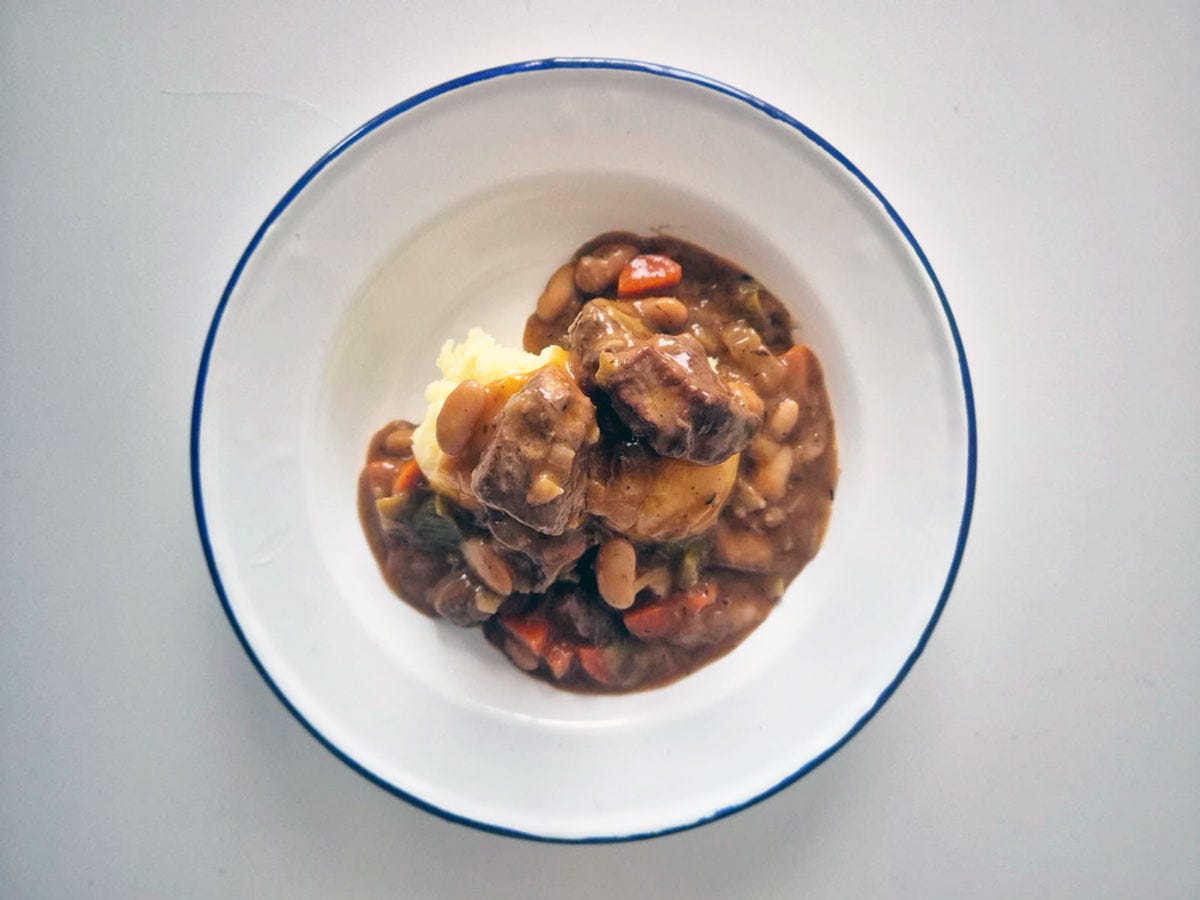
Slow-cooker lamb hotpot
I was in M&S a fortnight ago and spotted some reduced Welsh lamb neck fillets and of course, as it had a yellow label, I couldn’t leave it on the shelf. It also gave be a good excuse to give my new slow cooker a go. I say new, I’ve inherited it from the Great Auntie Den, which means it’s a bright orange 70s number. I love it. Anyway, this is a super-simple, put-it-on-and-leave-it dish – full of flavour and comforting goodness. You can do this all in one big oven-proof casserole dish if you prefer or if you don’t have a slow-cooker.
Ingredients (serves 4)
500g lamb neck, cut in chunks
1 large onion, roughly chopped
2 stalks celery, roughly chopped
1 large leek, roughly chopped
2 carrots, roughly chopped
2 cloves garlic, finely chopped
2 tbsp flour
1 tsp thyme
2 bay leaves
300ml lamb stock
400ml red wine (or just add more stock)
1 tsp tomato puree
1 tin of cannelloni or butter beans, drained
Good pinch salt
Generous mill of black pepper
Method
In a pan, gently brown the lamb in some oil. Remove the pieces to your slow-cooker pot.
Tip the onion, celery, leek, carrots and garlic into the pan where you cooked the lamb and allow to soften for about 10-15 mins. Tip into the slow-cooker pot.
Sprinkle over the flour, thyme and bay leaves and give everything a bit of a stir.
Pour in the lamb stock , wine and tomato puree, beans and stir again. Season with some salt and pepper and cook on high for 4-5 hours or for 6-7 on low until everything is beautifully tender.
If using a traditional oven, set the temperature to 160°C/320°F/ Gas Mark 3 and cook for about 2 hours.
Serve with buttery mashed potatoes.
If you try the recipe out, don’t forget to tag any photos with #mywelshkitchen.
The Playlist
To me, cooking and music go hand in hand, whether that’s singing at the top of your voice using a wooden spoon as a microphone while waiting for pasta to boil, or dancing around with the oven gloves on as the oven timer counts down. Here are some ideas for your Welsh Kitchen playlist.
Kissing Strangers by Tomos Gibson
Pantyfedwen by Côrdydd
Lisa Lân by Alaw and Gwilym Bowen Rhys
Bodega Cardiff – Chef tasting nights


You’ll know by now that I’m a big Hispanophile, and so any excuse to taste a little bit of Spain in Wales and I’m sold. Recently, I was invited to try out one of the monthly tasting nights at Bodega, which calls itself a “vibrant celebration of fire, fine wine, and Mediterranean flavours”. This seems pretty accurate if my visit was anything to go by. Each month, head chef Efe Orkut Yakut serves up a tasting menu with optional wine pairing. At £50 a head (food only) for around five courses, I think it’s a bit of a steal. I tried dishes such as moreish smoked cod roe taramasalata with zingy picked red onion and sesame crackers, hot and sweet monkfish with sherry glaze, roasted pork belly, and pillowy soft PX-laced torrijas (Spanish-style French toast).
Wines ranged from bright and breezy Albariño – a good match with the citrus-spritzed fired greens – to a grapefruity English sparkling blanc de blanc that cut through the fleshy monkfish and tempered a Aleppo chilli oil kick. Talking of wines, the restaurant has to be one of Wales’s leading spots for wines by the glass with more than 40 to choose from.
Yes, it’s a little out of the centre of Cardiff – but well worth making the extra effort for an evening of top-notch food and some stellar wines.
Bodega, 21 Clear Water Way, Cardiff, CF23 6DL – bodegawine.bar
From the archive


*While I make every effort to ensure prices are correct at the time of publication, I can’t guarantee they won’t have changed.